
Article Summary: An Electrical Control Cabinet is the central electrical and control platform that connects power distribution, automation components, protection devices, monitoring systems, and field equipment. A properly designed cabinet can improve operational safety, simplify maintenance, protect sensitive electrical components, and provide more stable control of industrial machinery. This article explains the structure, working principles, key components, selection factors, installation considerations, maintenance practices, and customization options that help industrial users choose a suitable Electrical Control Cabinet for demanding applications.
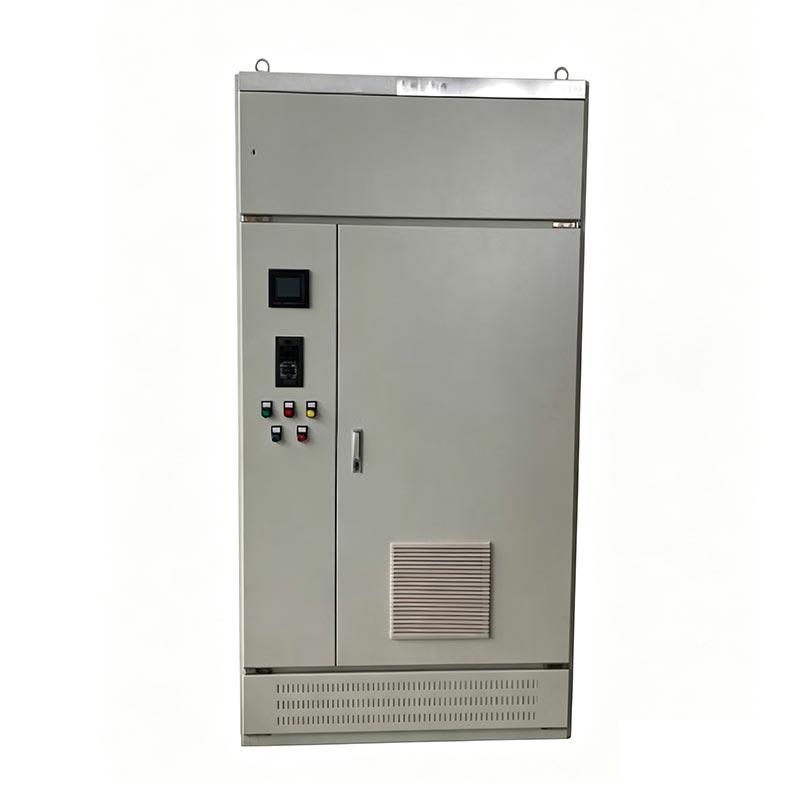
Table of Contents
- What Is an Electrical Control Cabinet?
- Why Is an Electrical Control Cabinet Important?
- What Components Are Inside an Electrical Control Cabinet?
- How Does an Electrical Control Cabinet Work?
- How Should You Select an Electrical Control Cabinet?
- What Design Factors Affect Cabinet Performance?
- Where Are Electrical Control Cabinets Used?
- Why Is Customization Important for Industrial Control Cabinets?
- How Can You Maintain an Electrical Control Cabinet?
- Electrical Control Cabinet Selection Checklist
- Why Work With Aote Tianjin Pump Co., Ltd.?
- Frequently Asked Questions
- Conclusion
What Is an Electrical Control Cabinet?
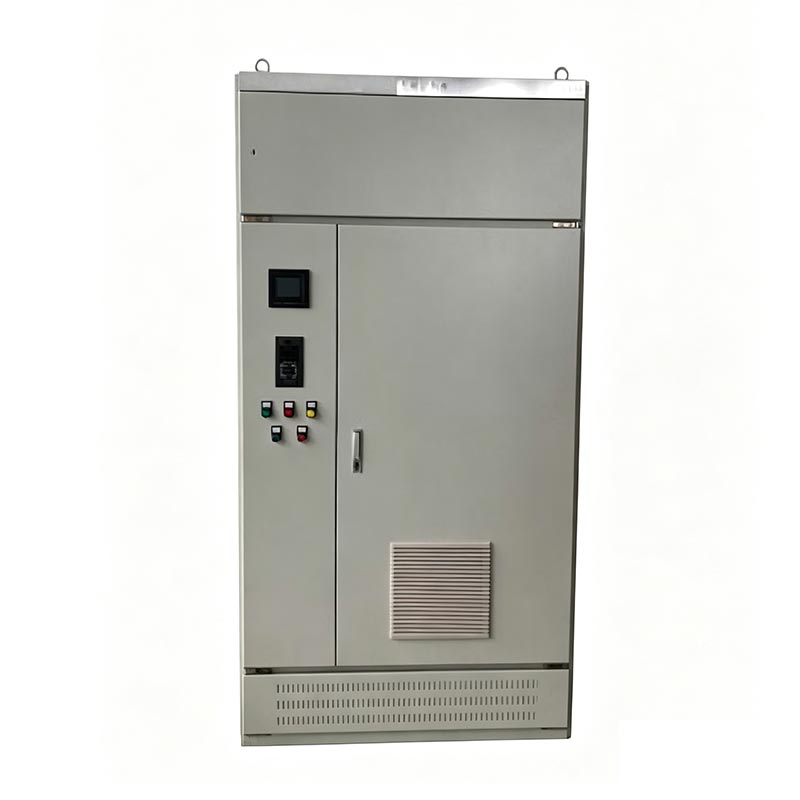
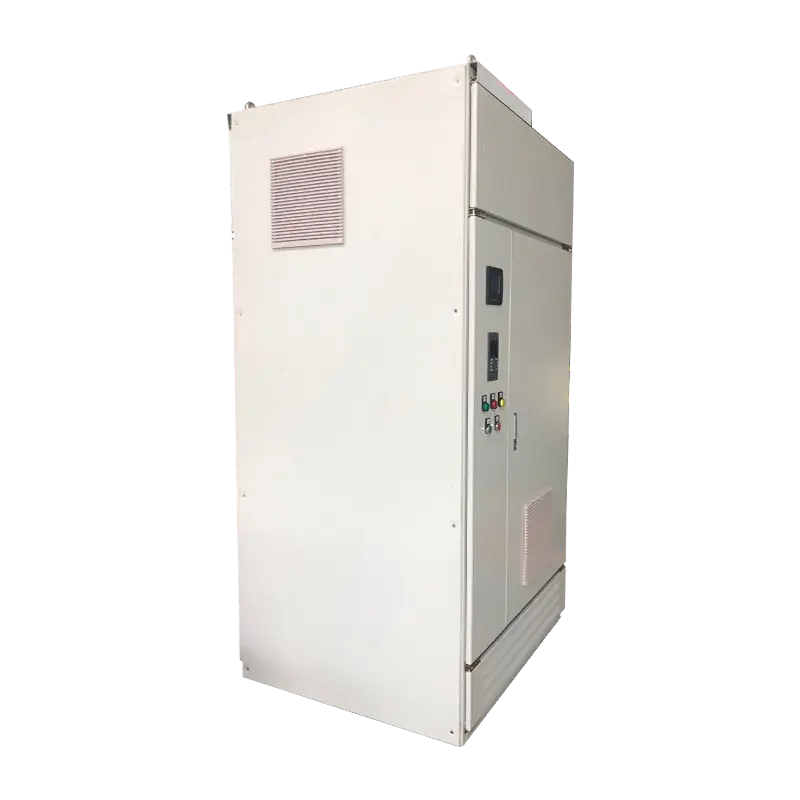
An Electrical Control Cabinet is an enclosed assembly used to house electrical, electronic, protection, control, and communication components for industrial equipment and automated systems. Instead of installing individual electrical devices throughout a facility, a control cabinet organizes the major control functions in one protected enclosure.
Depending on the application, a cabinet may contain circuit breakers, contactors, relays, motor protection devices, programmable logic controllers (PLCs), variable frequency drives (VFDs), terminal blocks, power supplies, monitoring instruments, communication modules, switches, cooling equipment, and other electrical components.
The cabinet essentially acts as the control center between incoming electrical power, the control system, and the equipment performing the actual work. In pump systems, for example, the cabinet can receive signals from pressure sensors, liquid-level sensors, flow meters, or other field devices and then control pump motors according to programmed operating conditions.
A high-quality cabinet is therefore more than a metal enclosure. It is an integrated engineering solution that must consider electrical safety, load requirements, environmental conditions, heat management, wiring organization, accessibility, and future maintenance.
Why Is an Electrical Control Cabinet Important?
Industrial machinery frequently operates continuously and under demanding conditions. Uncontrolled electrical installations can create unnecessary risks, including overheating, short circuits, wiring faults, difficult troubleshooting, and unplanned downtime. An appropriately engineered Electrical Control Cabinet addresses these challenges by bringing essential electrical and automation functions into a structured system.
- Improved electrical protection: Protective devices can disconnect faulty circuits before damage spreads to other equipment.
- Centralized control: Operators can manage multiple electrical loads and machines from a clearly organized control point.
- Better wiring management: Proper terminals, cable routing, and labeling make troubleshooting easier.
- Equipment protection: The enclosure helps protect internal components against dust, moisture, accidental contact, and other environmental influences when properly specified.
- Automation capability: PLCs, sensors, VFDs, and communication devices can be integrated into one coordinated control architecture.
- Maintenance efficiency: Technicians can inspect and service electrical components without searching through scattered installations.
- Scalability: A carefully planned cabinet can provide space and connection capacity for future modifications.
For facilities where pumps, motors, fans, compressors, conveyors, or processing equipment are essential to production, reliable electrical control can have a direct influence on operational continuity.
What Components Are Inside an Electrical Control Cabinet?
The exact configuration depends on the equipment and control strategy. A small motor control cabinet may contain only several protection and switching devices, while a sophisticated automation cabinet can integrate dozens of electrical and electronic components.
| Component | Primary Function | Typical Benefit |
|---|---|---|
| Circuit Breaker | Protects circuits against excessive current and faults | Improves electrical safety |
| Contactor | Switches motors and other electrical loads | Enables reliable remote switching |
| PLC | Executes programmed control logic | Supports automation and sequencing |
| VFD | Controls motor speed and operating characteristics | Improves process control and energy management |
| Relay | Provides switching and signal interface functions | Simplifies control logic |
| Terminal Block | Connects field wiring with internal circuits | Makes wiring easier to identify and service |
| Power Supply | Converts incoming power to required control voltage | Provides stable control power |
| Cooling or Ventilation Device | Manages internal heat | Helps prevent thermal stress |
Component selection should never be based only on purchase price. Electrical ratings, operating conditions, compatibility, protection requirements, expected duty cycle, and serviceability all need to be considered.
How Does an Electrical Control Cabinet Work?
The operating principle is based on the coordinated interaction between power distribution, control logic, protection, and field feedback.
First, electrical power enters the cabinet through the designated incoming connection. A main protective device provides isolation and overcurrent protection. Power is then distributed to individual circuits according to the system design.
Control components process signals from sensors, switches, operator interfaces, or automated control systems. When predetermined conditions are met, the control system sends commands to contactors, relays, VFDs, valves, motors, or other connected equipment.
For example, in an automated pump installation, a level sensor may detect that the water level has reached a predefined point. The PLC can interpret this signal and issue a start command to the appropriate pump. If pressure, temperature, overload, or another monitored parameter exceeds a specified limit, the control system can stop the equipment or activate an alarm.
This closed-loop process can be summarized as:
- Power enters the cabinet.
- Protection devices distribute and safeguard electrical circuits.
- Sensors and field devices provide operating information.
- The PLC or control system evaluates the incoming signals.
- Control devices execute the required commands.
- Feedback signals confirm operating status.
- Protection functions respond to abnormal conditions.
This architecture allows complex industrial processes to operate with greater consistency and less dependence on manual intervention.
How Should You Select an Electrical Control Cabinet?
Selecting the right cabinet begins with understanding the complete application rather than simply choosing an enclosure based on physical size. The electrical and mechanical requirements should be evaluated together.
1. Determine the electrical load.
Identify the supply voltage, frequency, total connected load, motor ratings, starting current, control voltage, and number of circuits. Insufficient electrical capacity can result in overheating and unreliable operation.
2. Define the control requirements.
Determine whether the application requires manual control, automatic sequencing, PLC control, VFD operation, remote monitoring, alarm functions, or communication with a higher-level control system.
3. Evaluate the environment.
Temperature, humidity, dust, water exposure, corrosive substances, vibration, and installation location can all influence enclosure selection and internal thermal management.
4. Consider motor control requirements.
Large motors may require dedicated starting methods, overload protection, soft starters, or VFDs. The cabinet should provide adequate electrical capacity and heat dissipation for the selected motor-control architecture.
5. Plan maintenance access.
Components should be arranged logically so technicians can identify, test, replace, and inspect them efficiently. A cabinet that is technically functional but difficult to service can increase long-term operating costs.
6. Allow reasonable expansion capacity.
Industrial systems often change after installation. Providing appropriate spare terminals, electrical capacity, physical space, and cable-entry options can make future modifications considerably easier.
What Design Factors Affect Cabinet Performance?
Good cabinet design requires attention to details that may not be obvious from the outside. Internal arrangement, heat generation, cable routing, grounding, and component separation can all influence reliability.
| Design Factor | Potential Problem if Ignored | Recommended Approach |
|---|---|---|
| Heat Dissipation | Component overheating and shortened service life | Calculate heat load and provide suitable ventilation or cooling |
| Cable Routing | Difficult troubleshooting and signal interference | Separate power and control wiring where appropriate |
| Grounding | Safety and electrical interference concerns | Use a properly engineered grounding arrangement |
| Component Spacing | Heat accumulation and difficult maintenance | Maintain appropriate clearances and service access |
| Environmental Protection | Dust or moisture entering the enclosure | Select an enclosure suitable for the installation environment |
Another important consideration is electromagnetic compatibility. VFDs and other power electronic devices can generate electrical noise. Appropriate cable management, grounding, shielding, and physical separation can help reduce interference with sensitive control signals.
Where Are Electrical Control Cabinets Used?
Electrical Control Cabinets are used across a wide range of industrial and commercial applications. Their configuration changes according to the equipment being controlled.
- Water supply and pumping systems
- Wastewater treatment facilities
- Industrial process equipment
- HVAC and building automation systems
- Manufacturing production lines
- Conveyor systems
- Industrial ventilation systems
- Booster pump stations
- Fire protection and water management systems
- Agricultural irrigation equipment
- Energy and utility infrastructure
- Automated machinery and production equipment
In pumping applications, the cabinet may coordinate multiple pumps, pressure sensors, level sensors, valves, alarms, and communication functions. This makes it possible to build a complete control solution rather than simply switching a pump motor on and off.
Why Is Customization Important for Industrial Control Cabinets?
There is no universal Electrical Control Cabinet configuration suitable for every industrial installation. Two facilities may use similar motors but have very different control requirements because of differences in operating pressure, flow demand, sensor configuration, power supply, environmental conditions, or automation architecture.
Customization allows the cabinet to be developed around the actual equipment and operating process. Depending on the project, customization may involve:
- Cabinet dimensions and enclosure configuration
- Incoming power specifications
- Number and rating of controlled motors
- PLC selection and programming requirements
- VFD or soft-start integration
- Sensor and instrument connections
- Local operator controls
- Alarm and indication systems
- Remote monitoring and communication interfaces
- Cable entry arrangements
- Cooling and ventilation solutions
- Component brands and electrical architecture
For international projects, engineering teams should also confirm that the electrical design, component ratings, enclosure construction, wiring practices, labeling, and testing procedures are appropriate for the destination market and project requirements.
How Can You Maintain an Electrical Control Cabinet?
Preventive maintenance is essential because electrical failures are often easier and less expensive to address before they become major faults. Maintenance should always be performed by qualified personnel using appropriate electrical safety procedures.
- Inspect the enclosure: Check for corrosion, physical damage, loose doors, damaged seals, and signs of moisture or dust ingress.
- Check electrical connections: Inspect terminals, wiring, and accessible connections for looseness, discoloration, or overheating.
- Monitor temperature: Look for excessive heat around drives, contactors, power supplies, and other high-load components.
- Inspect cooling equipment: Clean filters, fans, ventilation openings, and heat exchangers as required.
- Check component condition: Replace damaged relays, contactors, fuses, indicators, or other components according to the manufacturer's recommendations.
- Review alarms: Investigate recurring overload, temperature, communication, or fault alarms instead of repeatedly resetting them.
- Verify labeling: Make sure wires, terminals, breakers, and components remain clearly identifiable.
- Review backup and control parameters: Where programmable devices are used, maintain appropriate records of configurations and programs.
Maintenance intervals should be determined according to the operating environment, equipment criticality, manufacturer recommendations, and applicable safety procedures.
Electrical Control Cabinet Selection Checklist
Before ordering or engineering a cabinet, buyers can use the following checklist to reduce the risk of selecting an unsuitable configuration.
| Requirement | Questions to Confirm |
|---|---|
| Power Supply | What are the voltage, frequency, phase, and available short-circuit conditions? |
| Load | How many motors or electrical loads will be controlled? |
| Motor Control | Is direct starting, star-delta, soft starting, or variable-speed control required? |
| Automation | Is a PLC, HMI, remote monitoring, or communication interface required? |
| Environment | Will the cabinet be exposed to heat, moisture, dust, chemicals, vibration, or outdoor conditions? |
| Maintenance | Can technicians safely access and identify internal components? |
| Expansion | Is additional capacity needed for future equipment or sensors? |
Why Work With Aote Tianjin Pump Co., Ltd.?
Aote Tianjin Pump Co., Ltd. provides Electrical Control Cabinet solutions designed to support pumping and industrial control applications. Because the control cabinet is closely connected with the performance of pumps and related equipment, proper integration is essential for achieving reliable operation.
For a pump system, a suitable control solution should not be treated as an isolated electrical box. The cabinet needs to correspond with motor characteristics, pump operating requirements, sensor signals, protection functions, control logic, and the customer's installation environment.
A project-oriented approach can help customers address practical issues such as:
- Coordinating multiple pumps within one control system
- Managing automatic start and stop conditions
- Integrating pressure, level, flow, and other sensor signals
- Providing motor overload and electrical protection
- Supporting variable-speed pump operation where required
- Improving centralized monitoring and operator control
- Adapting the cabinet configuration to project-specific requirements
When selecting a supplier, customers should provide detailed information about the power supply, motor ratings, pump quantity, control method, sensors, installation environment, communication requirements, and applicable project standards. These details allow the control solution to be configured around the actual application rather than relying on an unsuitable standard arrangement.
Frequently Asked Questions
Q1: What is the main purpose of an Electrical Control Cabinet?
An Electrical Control Cabinet centralizes electrical distribution, equipment protection, control logic, monitoring, and automation functions. It provides an organized interface between the power supply, control system, sensors, and industrial equipment.
Q2: Can an Electrical Control Cabinet control multiple pumps?
Yes. A properly engineered cabinet can control multiple pumps using contactors, motor protection devices, VFDs, PLCs, relays, and other components. The exact configuration depends on the number and ratings of the pumps and the required operating sequence.
Q3: Does an Electrical Control Cabinet require a PLC?
Not every cabinet requires a PLC. Simple systems may use switches, relays, contactors, and protection devices, while more advanced applications benefit from PLC-based control for sequencing, monitoring, alarms, communication, and automation.
Q4: Can a control cabinet be installed outdoors?
Yes, provided the cabinet enclosure, cooling system, electrical components, cable entries, and environmental protection are appropriately selected for outdoor conditions. Weather exposure, humidity, temperature variation, dust, and direct sunlight should be considered during design.
Q5: Why does an Electrical Control Cabinet need cooling?
Electrical components generate heat during operation. Drives, power supplies, contactors, and other high-load devices can produce significant thermal energy. If heat is not adequately managed, component temperature may increase and affect reliability and service life.
Q6: What information should I provide when requesting a customized cabinet?
Useful information includes supply voltage, frequency, phase, motor quantity and power, pump specifications, control requirements, sensor types, communication requirements, installation location, environmental conditions, cabinet dimensions if specified, and any project-specific electrical requirements.
Q7: How often should an Electrical Control Cabinet be inspected?
Inspection frequency depends on operating conditions, equipment criticality, environmental exposure, manufacturer recommendations, and applicable safety procedures. Cabinets in dusty, humid, corrosive, or high-temperature environments may require more frequent inspection than cabinets installed in clean indoor facilities.
Q8: Can an Electrical Control Cabinet support remote monitoring?
Yes. Depending on the system architecture, PLCs, communication modules, HMIs, industrial networks, and other interfaces can be integrated to provide remote status monitoring, alarms, operating data, and control functions.
Q9: Why is cabinet customization preferable to choosing a generic cabinet?
Customization allows the electrical architecture, component ratings, control logic, enclosure configuration, cooling, wiring, and communication functions to match the actual application. This can improve serviceability and avoid unnecessary components or insufficient capacity.
Conclusion
An Electrical Control Cabinet is a critical part of modern industrial automation because it brings power distribution, protection, control, monitoring, and communication functions together in an organized system. The right cabinet can make industrial equipment easier to operate, monitor, protect, and maintain.
The best solution depends on more than cabinet dimensions. Electrical load, motor characteristics, control logic, environmental conditions, thermal management, wiring organization, protection requirements, communication functions, and future expansion should all be evaluated before finalizing the design.
For pump stations and water-management applications, the relationship between the pump, motor, sensors, control logic, and Electrical Control Cabinet is especially important. A properly integrated solution can help operators achieve dependable automatic operation while making system monitoring and maintenance more manageable.
If you are planning a new pumping system, upgrading an existing control system, or looking for a customized Electrical Control Cabinet matched to your equipment, Aote Tianjin Pump Co., Ltd. can provide application-oriented support. Share your electrical and control requirements with the engineering team to discuss a suitable configuration and contact us for a customized Electrical Control Cabinet solution.